Civil War Era Fashion Mid 1800s Fashion
Dolores's involvement in style history dates from her teenage years when vintage apparel was widely available in thrift stores.
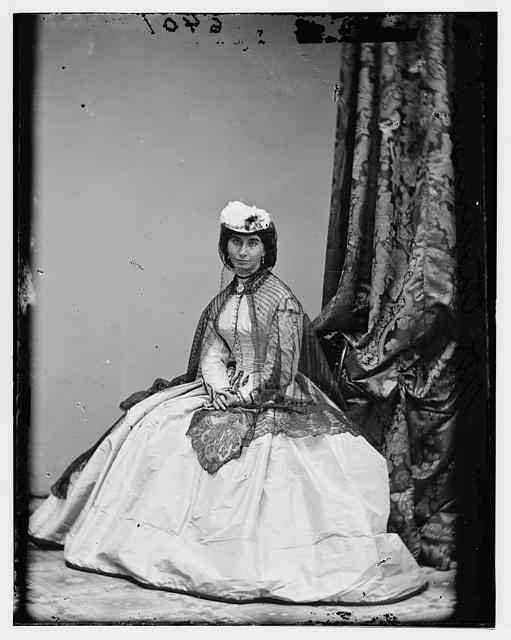
The American Ceremonious War was responsible for changes in women's way in the mid-1800s.
wikimedia eatables
The clothing worn during the American Civil War (1861—1845) is a pop costume for Halloween and for Civil State of war reenactors. In general, the fashions worn before and during the Ceremonious State of war are Victorian styles, but the clothing worn past women in the Confederate States take on a slightly unlike consideration.
Cotton was produced in the American South, but the textile mills that manufactured fabric were located in the northern states. The few southern mills worked to produce cloth for the military. The occludent of southern ports past northern forces prevented the importation of European equally well as American fabrics. Though blockade runners managed to move some goods through, those imports were few and far between. Blackness marketplace appurtenances were very expensive, so the Southward had to brand do without new fabric for the duration of the war.
What little fabric was available was needed for uniforms for the military. Even then, southern uniforms were not uniform and many versions existed, including lite gray, nighttime gray, lite bluish, and butternut dark-brown.
Southern women learned to make do with less and the famous scene in Gone With the Wind, when Scarlett uses drapes to make a clothes had some basis in fact. Clothing was mended or remade. Homespun became a popular, fifty-fifty patriotic substitute for manufactured material during the state of war.
Hoop Skirts
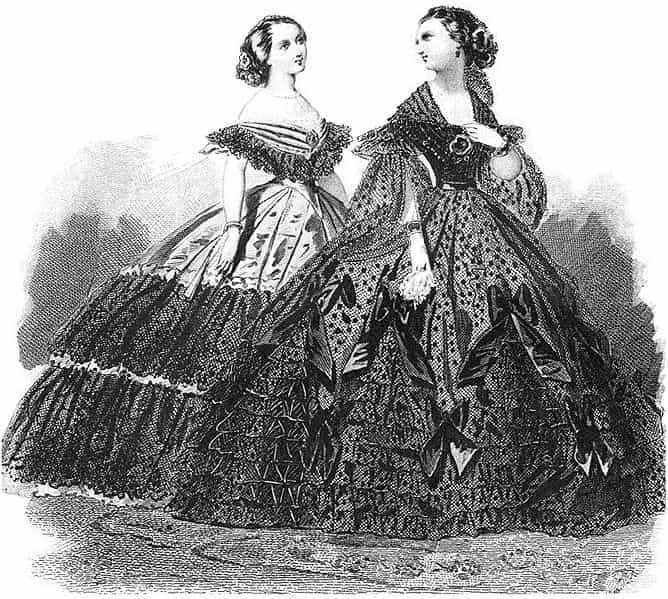
wikimedia commons
Earlier the War—Style in The Antebellum South
Nosotros similar to visualize women of the Antebellum south in traditional Victorian hoop skirts, grandly embellished with ribbons and bows. Of course, like all fashion periods, the grand, elegant styles of the period were limited to the wealthier classes. Simpler versions of hoop skirts were worn past women of less ways.
The aristocracy women of the Antebellum Southward enjoyed French and English fashions. They visited Europe and brought home new styles, fabrics, and designs from Paris and London to be created for them past seamstresses.
- Evening attire featured drib shoulder sleeves, low necklines, and voluminous skirts, held out by layers of petticoats, crinolines, or hoops. Hoops, horizontal circles of thin steel, were held in identify by vertical strips of fabric. Short capped sleeves exposed women's arms during warmer months and for evening wear.
- Bodices were somewhat lower than the bodily waistline, but rose after the war. Bodices were lined for back up and airtight in front end with buttons or hooks and eyes. Bodice and skirt fabrics normally matched.
- Day-wear dresses were loftier necked. It was unseemly for a woman to evidence skin earlier late afternoon. Equally pale skin was the manner, necks and shoulders had to be covered to avert the dominicus. Outdoors, during the solar day, women carried parasols to avert sunlight.
- Sleeves were full, widest at the elbow, erupting from a gathered shoulder seam. The Bishop sleeve featured the gathered shoulder, wide elbow, and narrowed at the wrist.
- Layered sleeves with the under-sleeve showing was popular for a time. Sleeves were oftentimes trimmed with ribbon or braid.One blazon sleeve called a negative sleeve showed the lining when the long sleeve was caught upward on the outer side, leaving the portion of the sleeve at the back of the arm hanging.
I interesting attribute of women's skirts was the hem. Today, a hem is turned nether and stitched. During Victorian times, and in the American Ceremonious War era, hems were bound by a strip of fabric. This material could exist removed and replaced when the hem showed wear.
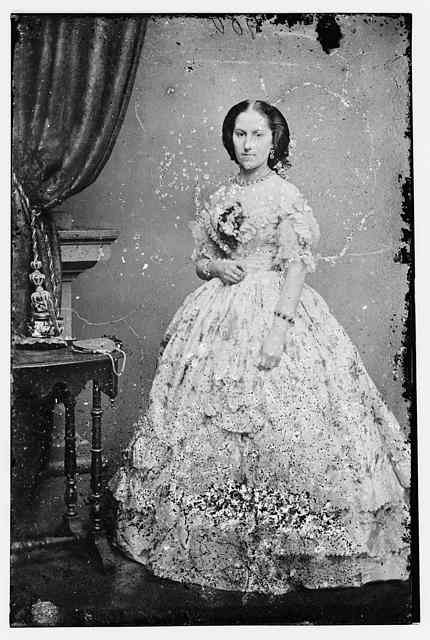
wikimedia commons
Scroll to Continue
Read More From Bellatory
Fabrics for Southern Well-to-Do
The elite women of the south wore fabrics in silk, velvet for colder conditions; fine lawn, linen, and muslin in warm weather condition.
White was a popular colour in warm weather for women with status. Black, worn for mourning, was often worn due to the high death rate, and during the war every bit women lost loved ones who perished in battle.
Big prints were difficult to match and restricted to the wealthy as the voluminous skirts were made of up to 5 yards of textile, and using a print, stripe or plaid increased the demand for fifty-fifty more material.
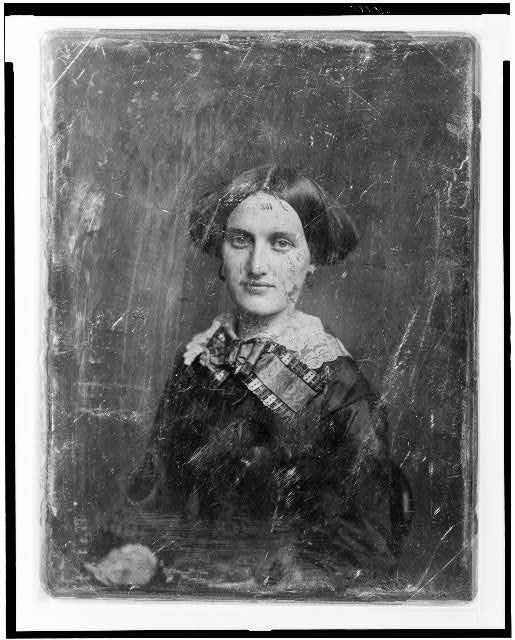
Centre part with hair looped at the side
US Gov. archival photo
Hair and Accessories
- Hair: The ideal women of the pre-Civil War South had pale skin and a rounded face up. Hair was parted downwardly the center and fatigued back, with soft loops on each side of the face that accentuated a round face up. These loops could be puffed out with a 'rat,' a small net stuffed with hair gathered during brushing.
For dress, the side hair hung in loose ringlets from a central part.
- Jewelry: Jewelry was minor sized and a rosy gold was the preference in frail, dangle earrings and oval horizontal or vertical brooches. A brooch was worn at the neckline, at the top of the collar during the day.
Matching chunky bracelets were worn on each wrist.
- Fans: Fans were a popular accompaniment of the American Southward, a region of hot, humid summers. Simple paddle fans made of palmetto leaves were round and small sized. Six to 10 inch folding fans could exist painted with pretty designs.
- A nosegay, or small agglomeration of aromatic flowers and herbs was a pop accessory in an era without deodorant.
- Small purses, or drawstring bags held a lady's necessities.
- Aprons, ofttimes worn for cooking or doing chores protected dresses.
- Lace was not widely used, except for collars and cuffs
- Collar and cuffs were removable for laundering or a stylish change. These removable collars and cuffs were unremarkably white.
- Parasol: A fabric umbrella carried on a sunny day to protect a woman's complexion from the sun, and offered a kind of portable shade
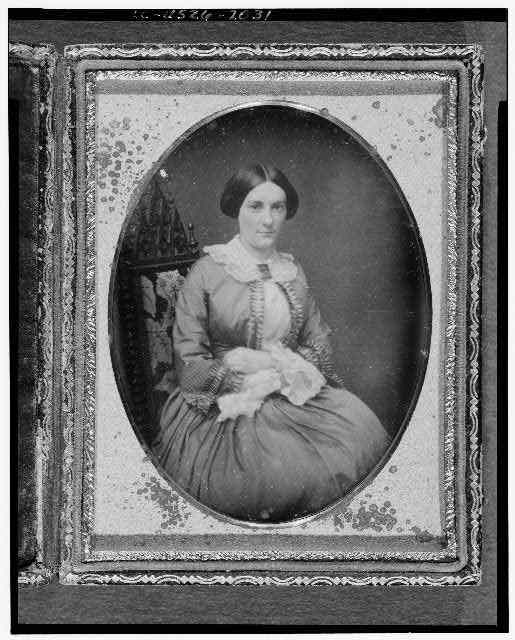
Ceremonious War era woman wearing lace cuffs and collar
The states Gov. archival photo
Adult female With a Parasol
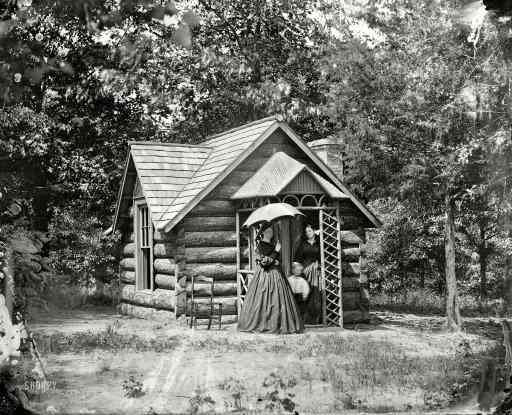
US Gov. archival photograph
Underwear of the Civl War South
Victorian women of the Civil War period wore many layers of undergarments. While layered undergarments were necessary in many areas for warmth, the custom also followed rules of etiquette and propriety.
The first layer was a soft cotton or linen chemise worn with drawstring drawers trimmed in lace or ribbon, catastrophe just below the genu.
Whalebone corsets laced at the back to accentuate a small waist. The mod concept that women of the twenty-four hours were obsessed with crushing themselves into the tiniest waist possible is not truthful - that behavior was limited to a minor subset.
During the mid 1800s, many petticoats, a crinoline, or crinoline cage hoop skirt created the huge, bell shaped skirt that typified the era. The hoop brim was impractical, generally worn for dressy occasion.
A Immature Woman Shows That You Can Sit Downwards While Wearing a Crinoline Cage (Hoop Skirt)
Clothing of Lower Class Women in the Civil War South
Lower class women did non wear wide hoop skirts, though less expensive crinoline cages (with fewer hoops) were available for those who could afford the mode. The lower classes wore coarser fabrics.
Coarser Fabrics Worn by Lower Classes
- Osnaburg—a fibroid, inexpensive linen
- Fustian—a cotton and linen blend
- Linsey-woolsey—a coarse linen, and wool alloy, subsequently cotton fiber and wool.
- Calico—a inexpensive cotton wool material printed with a pattern featuring tiny flowers
Almost women of the mean solar day wore solid fabrics. Stripes and plaids were limited to the wealthy as matching pieces of fabric use more material. Small prints, like calico, were easier to match and mend. Calico prints were usually night to hide stains. Black was a common color for all classes and worn for mourning dress. Many photographs of the time draw women dressed in black, as many suffered the loss of loved ones, so dressed in mourning attire.
Homespun fabric was not ofttimes used before the Ceremonious War, only became somewhat pop during the state of war due to cloth shortages. Contrary to popular conceptions, enslaved women did not clothing homespun as the work involved in the creation of that material was labor intensive and not seen every bit an economical use of a a worker'southward time. Slaves usually wore inexpensive manufactured fabrics. Notwithstanding, large plantations often employed spinners, weavers, seamstresses, and tailors in order to clothe the many people who worked there.
Enslaved people were issued a few sets of article of clothing each year. Poor people, laborers, the lower form, and enslaved people generally wore clothing made of tough, durable cloth. Their clothing was less tailored and embellished than the garments of the elite. Enslaved women who worked within the dwelling house dressed in more upward-to-date, more tailored and embellished garments than those who worked outdoors.
A wrapper was a loose, ane slice dress that was gathered and pleated from neck to hem and belted for shape often with an frock. Low, wide shoulders with wide sleeves gathered at the wrist. Wrappers were worn past working women, lower class women, rural women, and for household chores. A women of moderate substance wore a wrapper made of a better fabric.
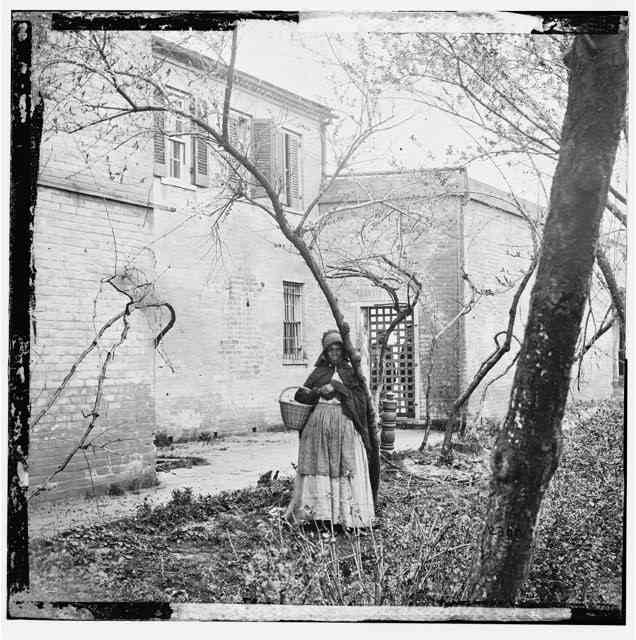
Enslaved adult female wearing bonnet, greatcoat, and apron
U.s.a. Gov. archival photo
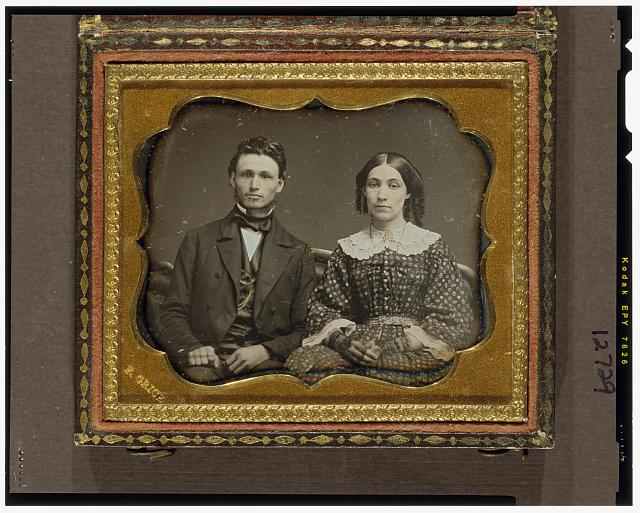
Civil War Era adult female in print wearing apparel with white collar and side curls
US Gov. archival photo
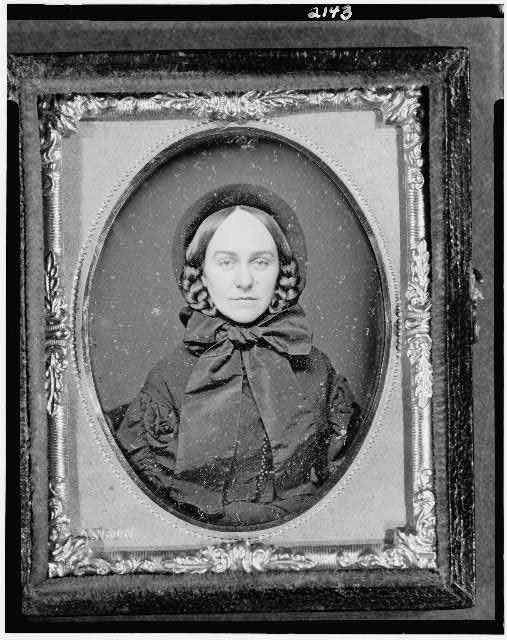
Ceremonious War era woman wearing bonnet with a big bow
US Gov. archival photograph
Women'southward Hats of the Ceremonious State of war Era
Hats were commonly worn during Victorian times and were a necessity for women of the south. Wide brimmed hats protected the face, cervix, and eyes from the sun. Wearing a hat was seen as a respectable practise and worn for proprietary as well as for looks and manner.
Wide brimmed garden hats were popular in warmer months. Frequently made of straw, garden hats were tied under the chin and often featured some decoration at the base of the crown.
Bonnets were worn in wintertime and made of heavier materieals than summer bonnets. Sun bonnets often featured a ruffle or minor curtain of fabric at the back to protect the neck from the lord's day.
The fabric of bonnets was stiffened into a wide forepart skirt and tied nether the chin with broad ribbons of fabric. Decoration could be changed to refresh the look of a bonnet. Faux flowers were a popular bonnet decoration. Feathers did non go popular until much later.
Spoon bonnets featured a tall, uplifted front end brim. Decorative elements similar silk flowers, or ruffles were worn inside the hat, under the brim.
Small caps were ofttimes worn indoors, especially past older women. These caps worn at the dorsum of the head could be decorated with ruffled edges, complect, or ribbon.
Poor women and slaves wore a kerchief tied behind the caput. Some enslaved women wore turbans.
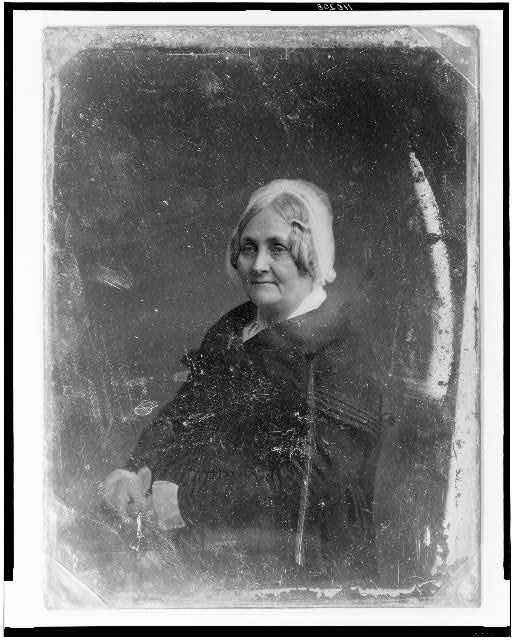
Older woman wearing a cap
U.s.a. Gov. archival photo
Tips on Making a Civil War or Antebellum Costume
If y'all want to create a costume for a woman of the Confederacy during the Ceremonious State of war, remember that many women wore mended clothing. Faded or muted colors piece of work well as new materials were not available during the war. Many fabrics can be artificially aged past soaking in black tea.
Remember that sewing machines were not widely available. Wealthier women could, yet afford the services of a seamstress, who might apply a sewing machine.
Many items of clothing were mitt sewn before, during, and afterward the state of war. For a truly authentic expect, mitt sew together all visible seams.
Belle Boyd—Amalgamated Spy
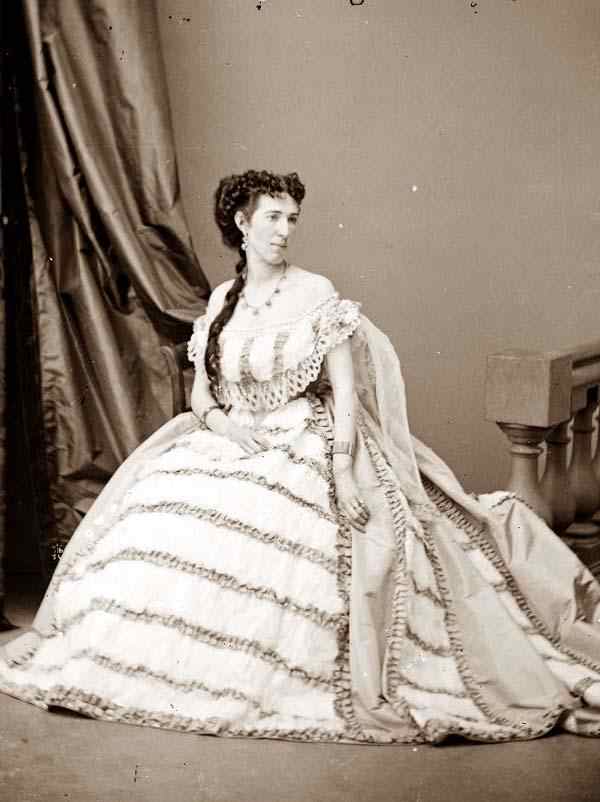
USGov archival photo
Civil State of war Era Seamstress
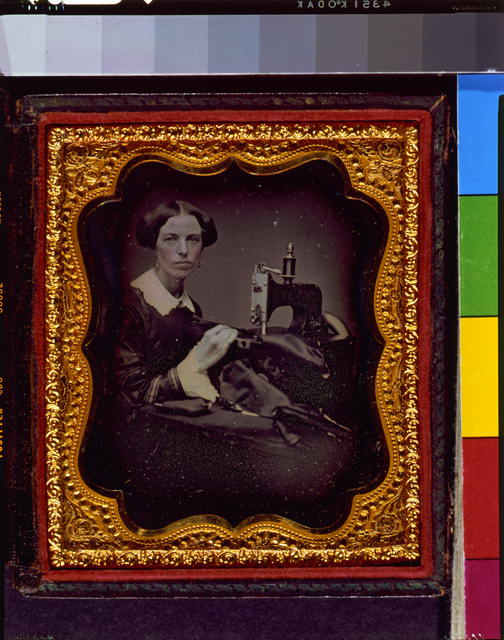
US Gov. archival photograph
For Further Reading
Costume and Fashion Source Books by Karen Taschek; Bailey Publishing Assembly
Article of clothing Through American History—The Civil War Through the Gilt Age 1861—1899 by Anita Stamper and Jill Condra
60 Civil State of war Era Mode Patterns, by Kristina Seleshanko
American Civil War Era Manner Plates : Peterson's Mag 1860—1865, by Mandie Foster and Dannielle Perry
Who Wore What Women's Wear 1861—1865, by Juanita Leisch
Questions & Answers
Question: Did women wearable make-up during the American Ceremonious State of war?
Reply: The Ceremonious State of war-era falls into the greater Victorian era, a time when women were supposed to look natural. While women once wore heavy makeup, a modern term, cosmetics were seen as vulgar, worn by actresses and prostitutes. A high-class lady avoided the sun as tanning and freckles were seen as low class. An aristocracy woman had to show that she did not labor in the sun.
Still, women used subtle cosmetics to heighten their appearance. Pastes and creams with moisturizing properties could hide blemishes, freckles, and uneven skin tones. Creme Celeste was a batter made of white wax, spermaceti (a substance from the head of a whale), rose water, glycerin, sugariness almond oil, and essential oils. Rice and zinc oxide powders could be dusted over the face to create the pale complexion so popular at the fourth dimension.
Lip balms often contained a tinge of colour. A very subtle blush or rouge was dusted on the cheeks, though obvious cheek coloring was viewed every bit inappropriate for a lady. Women plucked their eyebrows.
Dazzler products were purchased at apothecary shops simply as in later years, cosmetics have been sold at pharmacies and drug stores.
Question: Can you all the same notice hoop skirts in this century?
Answer: Hoop skirts still show up in broad-skirted wedding gowns. They tin exist found online for reenactment, period, or theatrical costumes. In the 1950s, very broad skirts were popular. Potent petticoats commonly provided back up but at that place were some instances of hoop inserts in petticoats. Hoop-La was i product I only institute on Etsy. But hoops are hard to deal with especially when trying to sit down downwardly. Some petticoats of the 1950s provided one or two hoops.
Question: May I utilise this article for my school project?
Answer: If yous desire to use this commodity as a resource for a schoolhouse project, you should contact your instructor. There are sites that educators prefer, and those may include scholastic journals or museum references. Your instructor may prefer that you use books for inquiry.
When referencing an online site for school projects, the way you cite the information depends, again, on your instructor's preference.
Question: Who was the seamstress for the hoop-skirt?
Reply: A seamstress sewed clothing but did not actually brand the muzzle crinoline for hoop skirts.
Hoops were worn under skirts and replaced hot, itchy crinolines. The bodily muzzle crinoline was mass produced in factories. Sparse pieces of cutting steel were covered with cotton. The circles of a hoop brim were smaller at the summit and large at the hem. They were held together with fabric tape.
A skirt fabricated with many yards of fabric was worn over top the cage.
© 2011 Dolores Monet
Dolores Monet (author) from East Coast, United States on January fourteen, 2020:
Are you sure that the clothing actually dates to the 1860s? Face information technology, few garments stand the exam of fourth dimension, in this case 160 years. Wearable can be damaged past wear, perspiration, insects, dampness, dry rot, and temperature extremes. Take a skillful long look at the garments to see if they are really old. Look for clues in fasteners, style, and materials.
You may want to check out the Vintage Way Order and the Costume Society of America. You can besides contact a local higher that has a costume or textile department for aid in understanding what y'all have.
To sell antiquarian wear, look online to see who is selling information technology. If it's a company, they are buying. If you see antique garments on a site similar eBay or etsy, you tin get that route. Check online prices to determine how much to charge. What yous earn will depend on the condition of the garments.
Tina C on January xiii, 2020:
I have a bulk of vintage clothing from my collection of vintage clothing during this era for sale. Where is a good place to sell information technology?
Dolores Monet (author) from East Coast, United States on October 08, 2019:
How-do-you-do Erin - upwards to vi or seven petticoats were worn with a crinoline. More than petticoats were worn for dressy occasions. The elite wore more petticoats than centre course or working form women.
The cumbersome nature of so many petticoats and the weight of those combined with the crinoline fabricated the newer hoop skirts much more comfortable. Likewise, hoop skirts were mass produced to were more affordable for the lower classes. The more money you had to spend, the more hoops were encased in the crinoline cage.
Erin on Oct 03, 2019:
How many petticoats were worn over the crinoline?
Dolores Monet (writer) from E Coast, United States on Apr 05, 2019:
With all the complicated layers and lacings, information technology would have been a bit of a chore to dress and undress. And with garments laced or fastened at the back, assistance would be required.
alex martel on April 04, 2019:
did it take long to have information technology off the dress in the 1800s
Dolores Monet (writer) from E Coast, United States on December 12, 2018:
Women in the North were able to live and dress better than those of the S. The textile mills of the North produced wear but blockades prevented the importation of fabric to the Confederacy. Besides, nigh of the battles were fought in the South. About 250,000 people were forced to exit their homes due to the fighting. Refugees left most of their belongings at home and this included clothing.
Due to the absence of men off fighting, southern women performed tasks usually left to men. The Due south was more agrarian than the N. As men went off to fight, women were left to do men's work on the farm. Their clothing would have reflected that.
Enslaved women of the South faced greater deprivations and their clothing would reflect that position.
Though the Civil War effected changes in the lives of women of both the North and the Southward, women of the North were able to maintain a somewhat meliorate wardrobe.
makayla on December 12, 2018:
is there any north?
Dolores Monet (author) from East Declension, United states of america on Oct x, 2016:
Renee - I am certain it was hard. For about of history including the mid 19th century, women's undergarments were open at the acme of the thigh. This fabricated it easier to use a chamber pot. I don't call back someone dressed upwardly would be using an outhouse.
Renee on Oct 06, 2016:
How and where did they go to the bath? I have asked this question and commonly become a vague reply. I want detail, please. I don't understand how they managed all that fabric, especially the hoop skirts. They didn't have plumbing, couldn't take fit into an outhouse and how did they manage a bedchamber pot? Where did they and men go to relieve themselves, say at a ballet, theater or church? How about a ball on a plantation? I would appreciate a descriptive answer. I've always been fascinated with the civil state of war era, and this has always puzzled me.
Dolores Monet (writer) from East Coast, United States on January 04, 2015:
H - those gigantic hoops and the tight corsets sure fabricated for some cute gowns simply they must have been so uncomfortable! Non to mention the expense of so many yards of cloth. I dear the concept of Farby. It must be very hard to achieve exact historical costume and I do admire those with the patience and ambition to adhere to the standards of the mean solar day. Thanks for pointing this out. I actually wanted to illustrate how hard it was to deal with this stuff.
H on Jan 01, 2015:
The daughter in your video is wearing a farby hoop, fifty-fifty for a ball-gown the hoop she is wearing is a circus tent!
Dolores Monet (writer) from Due east Coast, Us on April 05, 2011:
Sally - yous must take been a good little girl. I know some petty girls who would 'accidentally' break that thing! Non me, of grade, haha! I remember those itchy crinolines, but non the bodily hoops. Sheesh. What were they thinking? I imagine that wearing apparel did non get a lot of vesture!
Sherri from Southeastern Pennsylvania on April 04, 2011:
LOL, those crinolines did itch! But the skirt I was talking nigh had no crinoline underneath. It was shaped by an underskirt that had a frame to brand the dress "hoop out" at the bottom in a perfect circle. Perhaps "reinforced buckram" was not the right description...this underskirt had, at the bottom, sewn into its hem, something similar the ribbing nosotros might find in corsets. When it broke, it bankrupt!
Dolores Monet (author) from East Coast, United states of america on April 04, 2011:
Hi, Sally - give thanks you and then much for sharing a wonderful story and making such a lovely comment. A material like buckram would have been called a crinoline and I recall them back in the 1950's. I hated them. They itched! Funny how styles come back.
The actual hoops in a hoop skirt, the frames that held out the skirt are similar to the Elizabethan farthingale, a cycle-similar contraption that made those skirts stand manner out, like you lot see in pictures of Queen Elizabeth I.
Sherri from Southeastern Pennsylvania on April 03, 2011:
Marvelous Hub! I learned so much...never knew that the sleeve with the poof and narrowed wrist was called Bishop, and more.
In the early 1950s, my mother made flower-girl dresses for her brother'southward wedding. The dresses had hoop skirts, the hoop frames being made of a kind of reinforced buckram. My flower girl dress hoop skirt cracked its buckram, and pictures of me show a quite pointy dress at the hem. Sad!
Merely the point...my mother learned much of her dressmaking skill from her mother-in-law, who learned from her mother, who lived through the Ceremonious War in Ohio.
What a super Hub that, for me, then much connects the far past with my childhood.
0 Response to "Civil War Era Fashion Mid 1800s Fashion"
Post a Comment